


Samsung Galaxy S26 Ultra vs S25 Ultra: Everything You Need to Know Before Buying

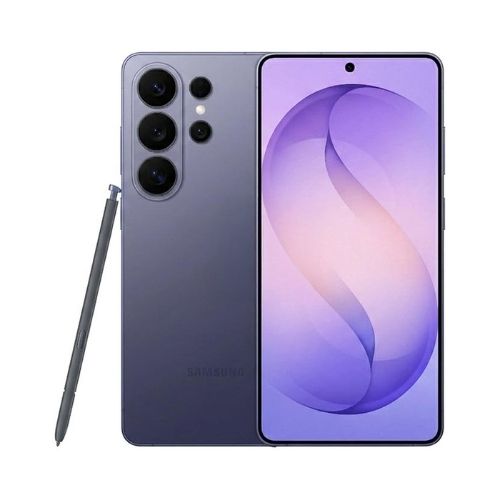
If you are trying to decide between the Samsung Galaxy S26 Ultra and the Galaxy S25 Ultra, you are in exactly the right place. Whether you already own the S25 Ultra and are considering an upgrade, or you are buying your first Ultra flagship and wondering which generation offers the better value, this guide breaks down every meaningful difference so you can make a confident, informed decision.
The S26 Ultra launched globally on March 11, 2026, at the same starting price of $1,299 as its predecessor, which makes this comparison especially important. Let us get into everything that sets these two phones apart.
Key Takeaways
- The Samsung Galaxy S26 Ultra and S25 Ultra start at the same price of $1,299, making this a true value comparison between generations.
- The S26 Ultra is thinner (7.9mm vs 8.2mm) and lighter (214g vs 218g), with more rounded corners for better in-hand comfort.
- The biggest exclusive on the S26 Ultra is the world-first hardware-level Privacy Display, which blocks side-angle screen visibility without any add-on protector.
- Charging has improved significantly: 60W wired on the S26 Ultra vs 45W on the S25 Ultra, reaching ~75% in about 30 minutes.
- Both phones share the same 5,000 mAh battery and identical 31-hour video playback endurance.
- The Snapdragon 8 Elite Gen 5 in the S26 Ultra delivers measurably better GPU performance, while the S25 Ultra retains advantages in close-up telephoto photography and its premium titanium frame.
- Both phones are promised seven years of OS and security updates.
- For buyers in Sri Lanka, both devices are available at xmobile.lk with islandwide delivery.
Quick Specs Comparison: S26 Ultra vs S25 Ultra
| Feature | Samsung Galaxy S26 Ultra | Samsung Galaxy S25 Ultra |
|---|---|---|
| Launch Date | March 11, 2026 | February 7, 2025 |
| Starting Price | $1,299 (256GB) | $1,299 (256GB) |
| Dimensions | 163.6 x 78.1 x 7.9 mm | 162.8 x 77.6 x 8.2 mm |
| Weight | 214g | 218g |
| Display | 6.9″ Dynamic AMOLED 2X | 6.9″ Dynamic AMOLED 2X |
| Refresh Rate | 1Hz to 120Hz | 1Hz to 120Hz |
| Peak Brightness | 2,600 nits | 2,600 nits |
| Chipset | Snapdragon 8 Elite Gen 5 | Snapdragon 8 Elite |
| RAM | 12GB / 16GB (1TB model) | 12GB |
| Storage | 256GB / 512GB / 1TB | 256GB / 512GB / 1TB |
| Main Camera | 200MP (f/1.4) | 200MP |
| Ultrawide | 50MP | 50MP |
| Telephoto | 10MP (3x) + 50MP (5x) | 10MP (3x) + 50MP (5x) |
| Front Camera | 12MP | 12MP |
| Battery | 5,000 mAh | 5,000 mAh |
| Wired Charging | 60W | 45W |
| Wireless Charging | 25W | 15W |
| Frame Material | Aluminum | Titanium |
| Back Glass | Gorilla Glass Armor 2 | Gorilla Glass Armor 2 |
| S Pen | Yes (no Bluetooth) | Yes (no Bluetooth) |
| Privacy Display | Yes | No |
| OS | Android 16 (One UI 8.5) | Android 15 (upgradeable) |
| IP Rating | IP68 | IP68 |
Design: Slimmer, Rounder, but No More Titanium
The S26 Ultra is slightly thinner at 7.9mm compared to 8.2mm on the S25 Ultra, and a touch lighter at 214g versus 218g. Those 4 grams may not sound like much, but combined with the more rounded corners and softer frame edges on the S26 Ultra, the in-hand feel is noticeably more comfortable during extended use.
Samsung has also made the S26 Ultra marginally taller and wider, with its screen growing ever so slightly in terms of the physical footprint. The rounded corner redesign gives the phone a more approachable feel compared to the sharp, angular edges of the S25 Ultra.
The biggest design trade-off here is the frame material. Samsung dropped the premium titanium frame found on the S25 Ultra and reverted to aluminum on the S26 Ultra. Titanium is significantly stronger and more scratch-resistant than aluminum, so the S25 Ultra has a small durability advantage in that regard.
On the back, the S26 Ultra brings back a raised, pill-shaped camera island rather than the floating individual lens arrangement from recent models. This creates a more prominent camera bump. The phone wobbles slightly when placed face-up on a flat surface, which is worth knowing before you buy.
Both phones maintain IP68 water and dust resistance, and the S Pen is retained on the S26 Ultra with the same Bluetooth-free experience introduced with the S25 Ultra.
If you are also considering Samsung’s foldable lineup alongside the Ultra series, you can explore current options in the full Samsung phones range at xmobile.lk.
Winner: S26 Ultra for comfort in hand; S25 Ultra for premium build material.
Display: Same Specs, One Groundbreaking New Feature
Both phones feature the same 6.9-inch Dynamic AMOLED 2X panel with a QHD+ resolution of 3120 x 1440 pixels, adaptive refresh from 1Hz to 120Hz, and peak brightness of 2,600 nits. On the surface, the displays look identical on paper.
What changes everything on the S26 Ultra is the Privacy Display. This is a hardware-level feature built directly into the display that reduces screen visibility from side angles without requiring any screen protector or overlay. Think of it as a built-in privacy filter that actually works at the pixel level, not just a software trick.
This matters enormously if you work in public spaces, use mobile banking frequently, or simply value screen privacy. It is the first implementation of its kind on any smartphone, and early reviews from Trusted Reviews and GSMArena have called it “genuinely brilliant” in real-world use.
Beyond that unique feature, the display experience between the two phones is effectively identical for everyday use.
Did You Know? Privacy filters for screens were first developed for desktop monitors in the late 1990s by companies like 3M, using micro-louver optical technology that physically blocked light at wide angles. The Samsung Galaxy S26 Ultra is the first smartphone ever to embed an equivalent privacy filter at the hardware display level, eliminating the need for any external protector. Learn more about screen privacy technology from 3M.
Winner: S26 Ultra for the Privacy Display innovation; S25 Ultra for the same quality at a potentially lower price as supply ages.
Performance: A Meaningful Generational Leap
The S26 Ultra is powered by the Snapdragon 8 Elite Gen 5, built on TSMC’s 3nm process, while the S25 Ultra ran on the Snapdragon 8 Elite (also 3nm, but the previous generation). Benchmarks like 3DMark show a measurable improvement in both CPU and GPU performance on the newer chip.
Benchmark scores from PhoneArena put the S26 Ultra at 11,259 in the 3D Mark High benchmark compared to 9,626 for the S25 Ultra. For GPU-intensive gaming and heavy multitasking, the S26 Ultra will handle things more efficiently and keep performance sustained for longer.
The 1TB storage variant of the S26 Ultra also bumps RAM from 12GB to 16GB, which is a notable upgrade for power users who run multiple demanding apps simultaneously or use features like Samsung DeX intensively.
For everyday tasks, messaging, social media, and streaming, both phones are comfortably overkill. If you play graphics-heavy games or edit video on the device, the S26 Ultra has a meaningful edge.
You can compare both the Samsung Galaxy S26 Ultra and the Samsung Galaxy S25 Ultra 12GB 256GB side by side on the xmobile.lk product pages to check current pricing in Sri Lanka.
Winner: S26 Ultra, clearly.
Cameras: The Specs Look Identical, But There Are Differences
On paper, the camera systems look virtually the same: both phones have a 200MP primary sensor, a 50MP ultrawide, a 10MP 3x telephoto, and a 50MP 5x periscope telephoto. The front camera is 12MP on both.
However, there are real-world differences worth knowing. The S26 Ultra’s main sensor uses a wider f/1.4 aperture on the primary camera compared to the S25 Ultra, which allows slightly more light in low-light photography. Samsung has also introduced new video recording capabilities, including a Horizon Lock stabilization mode that keeps footage level even when you rotate the device significantly during recording.
Where the S25 Ultra actually holds an advantage is in close-up photography. The S25 Ultra’s periscope telephoto configuration performs better for macro-distance shots, which GSMArena noted in their direct comparison.
Selfie shooters get slightly wider shots on the S26 Ultra due to a minor lens angle adjustment, which some users will prefer and others will not notice.
The overall camera experience is similar enough that photographers upgrading specifically for camera improvements may feel the difference is incremental rather than transformational.
Did You Know? A 200MP smartphone sensor does not capture a 200MP image in every shot. Samsung’s ProVisual Engine uses a technique called pixel binning, combining multiple smaller pixels into one larger virtual pixel, to improve light capture in low-light conditions. When maximum detail is needed, the full 200MP resolution can be captured. Qualcomm’s imaging architecture documentation explains how the Snapdragon 8 Elite Gen 5 ISP handles this processing at the chip level.
Winner: Tie, with slight edges going in different directions. S26 Ultra for low light and video stabilization; S25 Ultra for close-up telephoto shots.
Battery and Charging: Same Size, Much Faster Top-Up
Both phones carry the same 5,000 mAh battery. Real-world video playback endurance is listed at 31 hours on both devices, so daily battery life is essentially equal.
The upgrade comes in charging speed. The S26 Ultra jumps to 60W wired charging with Super Fast Charging 3.0, delivering around 75% charge in approximately 30 minutes and a full charge in about 53 minutes. The S25 Ultra topped out at 45W wired charging, which takes just over an hour for a full charge.
Wireless charging also improves from 15W on the S25 Ultra to 25W on the S26 Ultra, which is a significant quality-of-life upgrade for pad users.
One thing to note: the S26 Ultra does not support Qi2 magnetic wireless charging, unlike the Apple iPhone 17 and Google Pixel 10. If you were hoping Samsung would add magnets for snap-on accessories, that feature is absent for another generation.
Winner: S26 Ultra for charging speed. Draw on battery endurance.
Software and AI Features
The S26 Ultra ships with Android 16 and One UI 8.5 out of the box. The Samsung Galaxy S25 Ultra shipped with Android 15 but will receive the Android 16 update. Both phones are promised seven years of OS and security updates, which is an industry-leading commitment.
Galaxy AI features are expanded on the S26 Ultra, with Photo Assist, Creative Studio, and other tools now supporting 41 languages as of launch. The Now Nudge and Now Brief features that surface contextual information support 13 languages.
Deeper AI integration throughout the camera, settings, and productivity apps is the main software story for the S26 Ultra. If you are currently on an S25 Ultra, some of these AI features may arrive through software updates, but the full hardware-accelerated experience is native only to the newer chip.
Winner: S26 Ultra, though much of the AI advantage may reach S25 Ultra users through updates.
Price and Value: The Real Buying Decision
Both phones launched at $1,299 for the base 256GB model in the US. The storage tiers run identically: $1,500 for 512GB and $1,800 for 1TB.
However, now that the S26 Ultra has launched, the S25 Ultra is available at reduced prices through retailers, carriers, and trade-in promotions. Depending on where you shop, the S25 Ultra can be found at significantly lower prices than its original launch price, especially with trade-in deals.
If you are buying new at full retail, both cost the same. But if you are comparison shopping with trade-ins, refurbished units, or retailer promotions, the S25 Ultra now represents excellent value for a phone that remains one of the best smartphones ever made.
If you are upgrading from an S24 Ultra or older model, the S26 Ultra’s faster charging, Privacy Display, and more powerful chipset make a compelling case. If you are upgrading from the S25 Ultra, the incremental nature of the improvements means you could reasonably wait another generation.
Pair either phone with a Samsung Galaxy Watch 7 or the Samsung Galaxy Watch Ultra LTE 47mm to get the full connected Samsung ecosystem experience. And for audio, the Samsung Galaxy Buds 3 Pro integrate seamlessly with both Ultra flagship models for hands-free calls and high-quality audio.
Who Should Buy the Samsung Galaxy S26 Ultra?
The S26 Ultra is the right choice if you are a new buyer or upgrading from the Samsung Galaxy S24 Ultra or older, want the Privacy Display for daily public use, charge your phone frequently and will appreciate the 60W speed, care about having the latest Galaxy AI features natively, or value having the longest possible software support window.
The S25 Ultra still makes sense if you can find it at a significantly reduced price, want a titanium frame for durability, prefer close-up telephoto performance, or already own an S25 Ultra and find the incremental upgrades insufficient to justify switching costs.
Browse all current Samsung phones available in Sri Lanka on xmobile.lk to compare prices and find the best deal for your budget.
Final Verdict
The Samsung Galaxy S26 Ultra is a refined, thoughtful upgrade rather than a ground-up reinvention. The Privacy Display is a genuinely new idea in smartphones, the charging improvements are practical and daily-noticeable, and the Snapdragon 8 Elite Gen 5 ensures this phone will stay fast and capable for years.
The Galaxy S25 Ultra, though a year old, remains a powerhouse that stands toe-to-toe with the S26 Ultra in most real-world scenarios. It is a harder sell at full retail price, but if you find it discounted, it remains one of the best phones available.
For buyers at xmobile.lk looking to invest in a long-term device, the S26 Ultra is the smarter choice if you are buying today. It ships with the latest software, charges significantly faster, and includes hardware features like the Privacy Display that you simply cannot get on any other phone in any category right now.
Check current pricing and availability on the Samsung Galaxy S26 Ultra product page and the Samsung Galaxy S25 Ultra 512GB variant at xmobile.lk.
Frequently Asked Questions
1. Is the Samsung Galaxy S26 Ultra worth upgrading to from the S25 Ultra?
For most S25 Ultra owners, the upgrade is not essential. The two phones share the same battery size, identical display panel, and very similar cameras. The meaningful gains on the S26 Ultra are faster 60W wired charging, the Privacy Display, and the newer Snapdragon 8 Elite Gen 5 chip. If any of those three features matter significantly to your daily use, upgrading makes sense. Otherwise, waiting for the S27 Ultra may be the smarter financial decision.
2. What is the Privacy Display on the Samsung Galaxy S26 Ultra and how does it work?
The Privacy Display on the S26 Ultra is a hardware-level feature embedded directly into the display panel. It works similarly to a privacy screen protector, but at the pixel level, restricting the viewing angle so that people sitting beside you cannot easily see your screen content. Unlike stick-on privacy filters, this feature can be toggled on or off in software, giving you full brightness and wide-angle visibility when you want it and privacy protection when you need it.
3. Does the Samsung Galaxy S25 Ultra still support the S Pen?
Yes. Both the S26 Ultra and the S25 Ultra include a built-in S Pen. However, neither phone supports Bluetooth S Pen features. Samsung removed Bluetooth functionality from the S Pen starting with the S25 Ultra, and that decision carries forward to the S26 Ultra. The S Pen on both models functions as a stylus for writing, drawing, and annotation, but the remote shutter and presentation control features tied to Bluetooth are no longer available.
4. What is the starting price of the Samsung Galaxy S26 Ultra in Sri Lanka?
For the most current pricing in Sri Lanka, check the Samsung Galaxy S26 Ultra product page at xmobile.lk, as LKR pricing is subject to currency fluctuations and import duties. Xmobile.lk offers islandwide delivery and instalment payment options.
5. How does the Galaxy S26 Ultra camera compare to the S25 Ultra in low light?
The S26 Ultra has a slight low-light photography advantage thanks to its wider f/1.4 aperture on the primary 200MP camera, which allows more light into the sensor compared to the S25 Ultra. For close-up telephoto shots, however, the S25 Ultra’s periscope zoom configuration is generally considered better. In most everyday shooting situations, the difference between the two phones is small enough that it would be invisible to most users.
6. Does the Samsung Galaxy S26 Ultra support 5G in Sri Lanka?
Yes. The Samsung Galaxy S26 Ultra supports 5G connectivity alongside LTE, HSPA, and GSM networks. This makes it future-proof as 5G network infrastructure continues to expand in Sri Lanka.
7. Can I pair the Samsung Galaxy S26 Ultra or S25 Ultra with a Samsung Galaxy Watch?
Absolutely. Both the S26 Ultra and S25 Ultra work seamlessly with all current Samsung Galaxy Watches, including the Samsung Galaxy Watch 7 and the Samsung Galaxy Watch Ultra LTE 47mm. The Galaxy ecosystem integration allows health data syncing, notification mirroring, and automatic call routing between your phone and watch.
8. What accessories are compatible with both the S26 Ultra and S25 Ultra?
Many accessories designed for the S25 Ultra, such as wireless charging pads, USB-C cables, and Bluetooth earbuds, work with the S26 Ultra as well. However, physical cases are not cross-compatible due to the slightly different dimensions and camera bump design. You will need a case specific to each model. For audio accessories, the Samsung Galaxy Buds 3 Pro pair with both phones and offer the deepest software integration within the Samsung ecosystem.